Fire safety auditing for fire and rescue services
An audit workspace for protection officers. It helps with preparation, evidence, the audit record and routine letters. Decisions, enforcement and statutory notices stay with authorised officers.
A separate product from TIFA Fire Assessments, with its own workflow and screens. Shown with fictional data. Not deployed in any service.
Built around the officer’s audit
An audit under the Regulatory Reform (Fire Safety) Order 2005 is a different job from writing a fire risk assessment. The workspace follows the officer’s process.
Step 1: Prepare from prior records
Previous audits, outcomes and deficiencies the officer is authorised to see, with points to check on this visit drawn from them.Step 2: Capture evidence on site
Observations by voice or text, photos and documents, tagged to the relevant article and location. Works without signal.Step 3: Build the structured audit record
Observations are organised by article. Where an observation may be relevant to a deficiency, it is marked for the officer to consider, with legal and policy references to check.
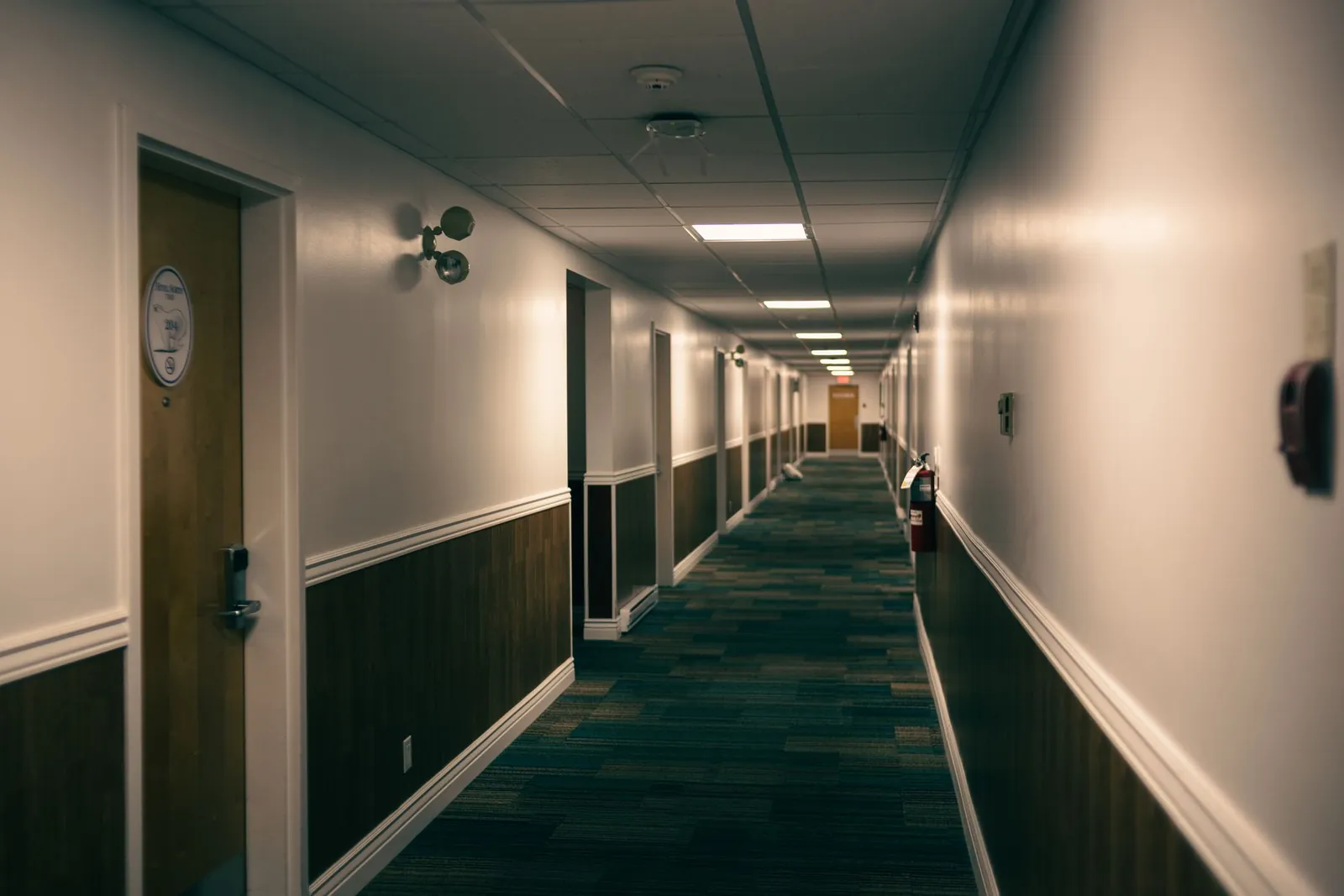
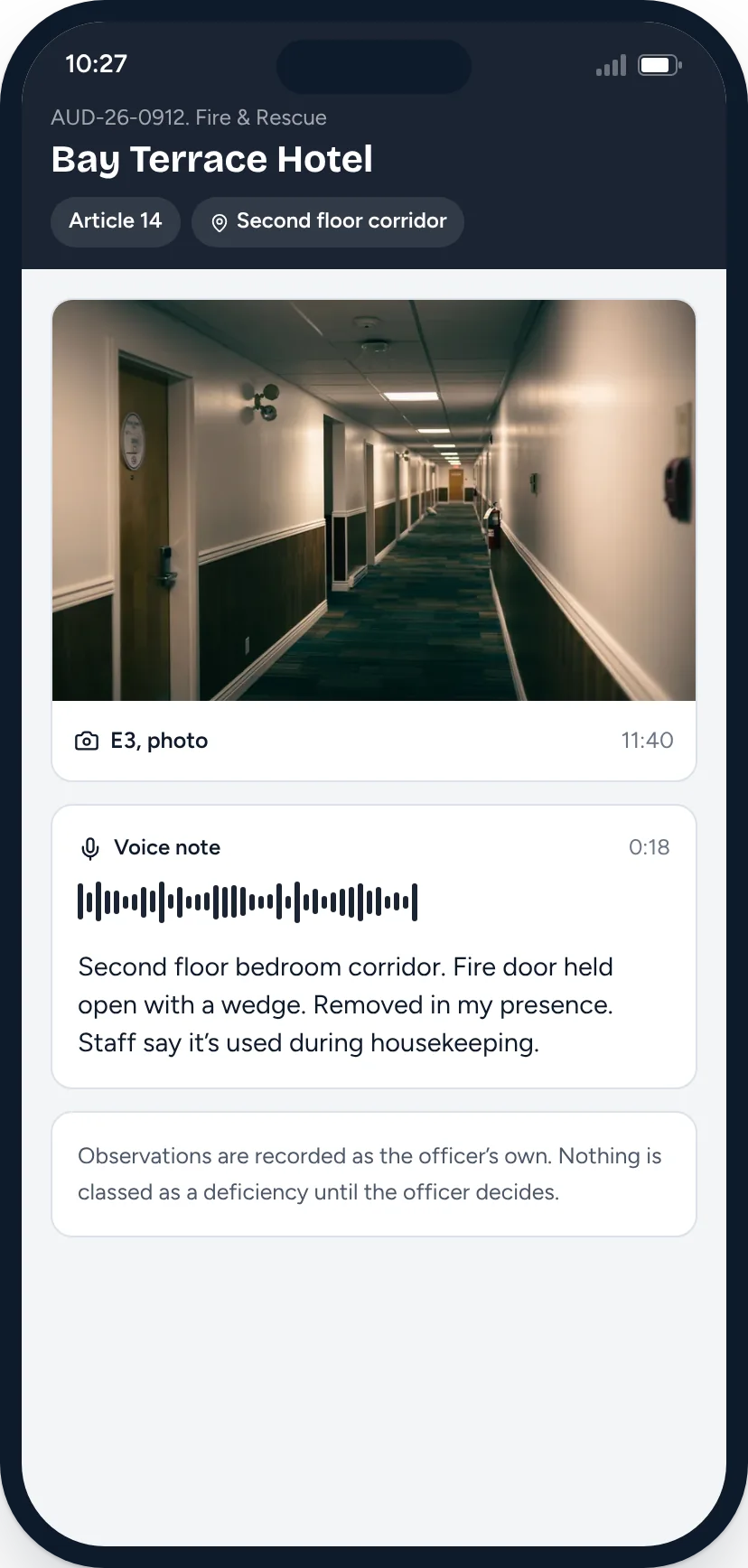
Step 4: Record the officer’s decision and reasoning
The officer chooses the outcome and writes their reasoning. Nothing is classed as a deficiency, and no outcome is set, until the officer does it.Step 5: Draft routine correspondence
A notification of deficiencies or similar routine letter is drafted from the officer’s recorded findings, clearly marked as a draft for the officer to edit.Step 6: Supervisory review and issue
The case goes to a supervisor for approval under the service’s own authorisation rules. The officer issues the letter and the follow-up is scheduled.
The workflow on film
An officer prepares for a hotel audit, captures evidence, reviews the draft audit record, records a decision and passes the case through supervisory review. This is a proposed workflow, not a deployed authority integration.
What the software will not do
The service and its officers remain the decision makers. The software is designed so that this cannot be bypassed.
It will not decide enforcement outcomes
Outcomes are chosen by an authorised officer and approved through the service’s own review process.
It will not issue statutory notices
The software can hold the service’s templates, but it cannot issue an enforcement, prohibition or alterations notice.
It will not replace the officer’s judgement
Legal and policy references are offered for the officer to check. They are not a legal determination.
How it would connect to your systems
Services already hold their premises and case records in an existing system. TIFA Fire would sit alongside it, not replace it. Any integration would be agreed and approved with the service first.
Information governance
These are the commitments a pilot would be built on. They would be set out in a data processing agreement before any service data is used.
- Officers see only the premises and records they are authorised to see.
- Every observation, draft, edit, decision and approval is recorded with a name and time.
- Drafted text is marked as drafted until an officer accepts it.
- Retention follows the service’s own records policy.
- Hosting region agreed with the service, with UK and EU options.
- Service data is not used to train AI models.
- Support for the service’s data protection impact assessment before a pilot.
- Sign-in through the service’s identity provider where possible.
A controlled pilot
We would work with one protection team at a time, in stages, with the service deciding whether to move on at each one.
- Stage 1
Discovery
Understand the audit process, letters, policies and systems. Agree the data protection approach.
- Stage 2
Configuration
Set up the service’s audit structure, policy references and letter templates in a test environment.
- Stage 3
Limited live use
A small group of named officers use it on real audits alongside the existing process.
- Stage 4
Evaluation
Review quality, time and officer feedback together, then decide whether to continue.
Talk to us about a pilot
For protection managers and heads of prevention and protection. We’ll show the workflow and listen to how your audits run today.